





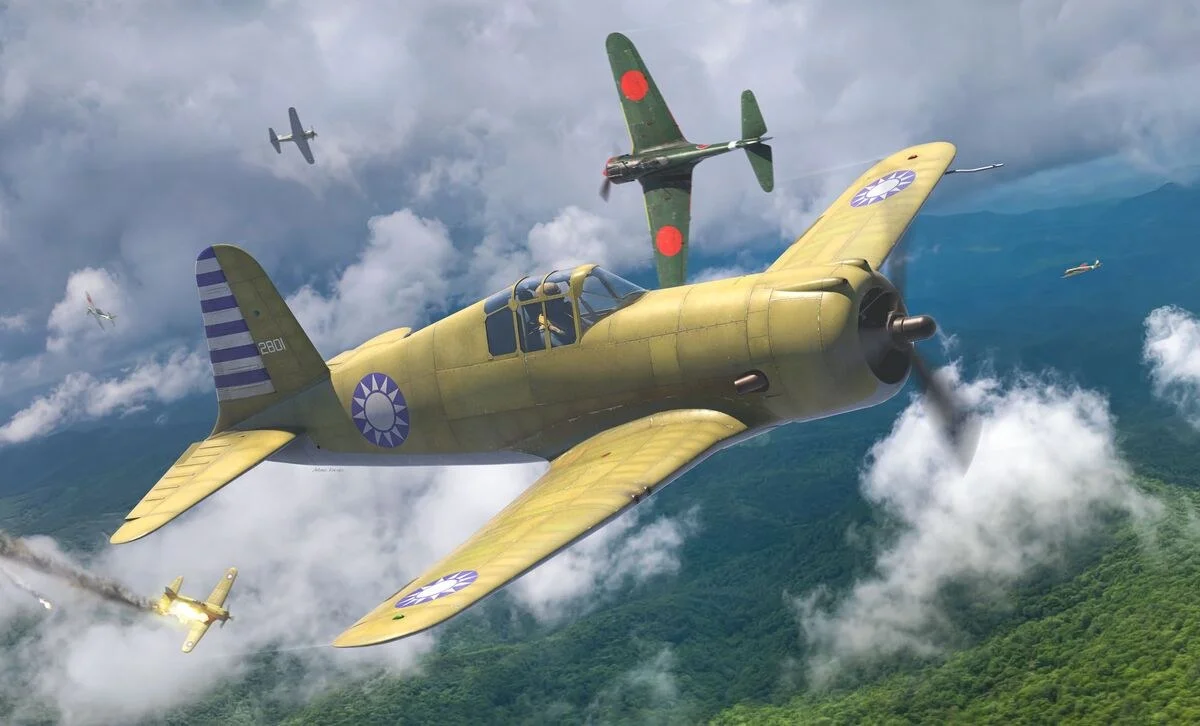


Dora Wings DW 48053 - 1:48 Vultee P-66 Vanguard
Do darmowej dostawy brakuje Ci jedynie 299 zł
Masz darmową dostawę ✓
Product code: DW-48053
Barcode:
Ask about the product

Administratorem danych osobowych jest Sklep Modelarski Exito. Przetwarzamy je w celu przesłania odpowiedzi na zapytanie. Więcej informacji dotyczących przetwarzania danych osobowych znajduje się w polityce prywatności.
Share the product card



Leave feedback on the product

Description
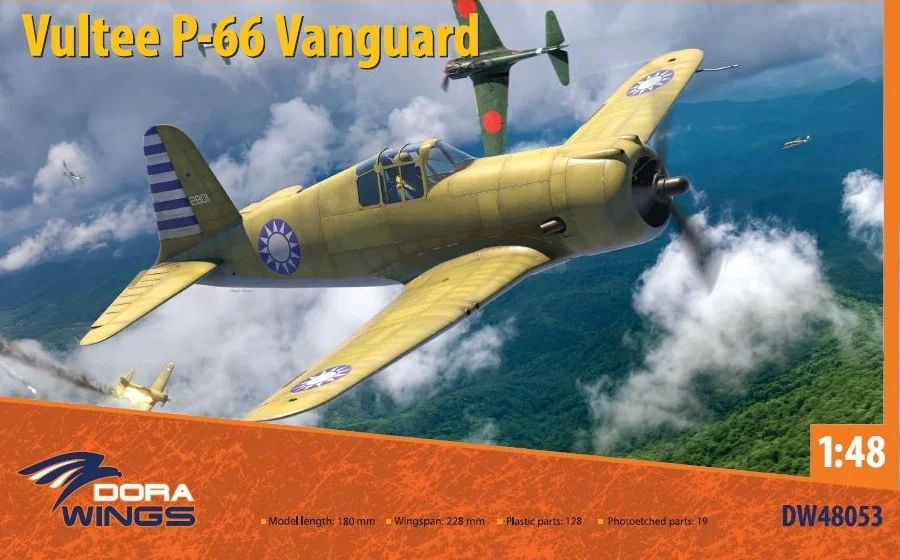
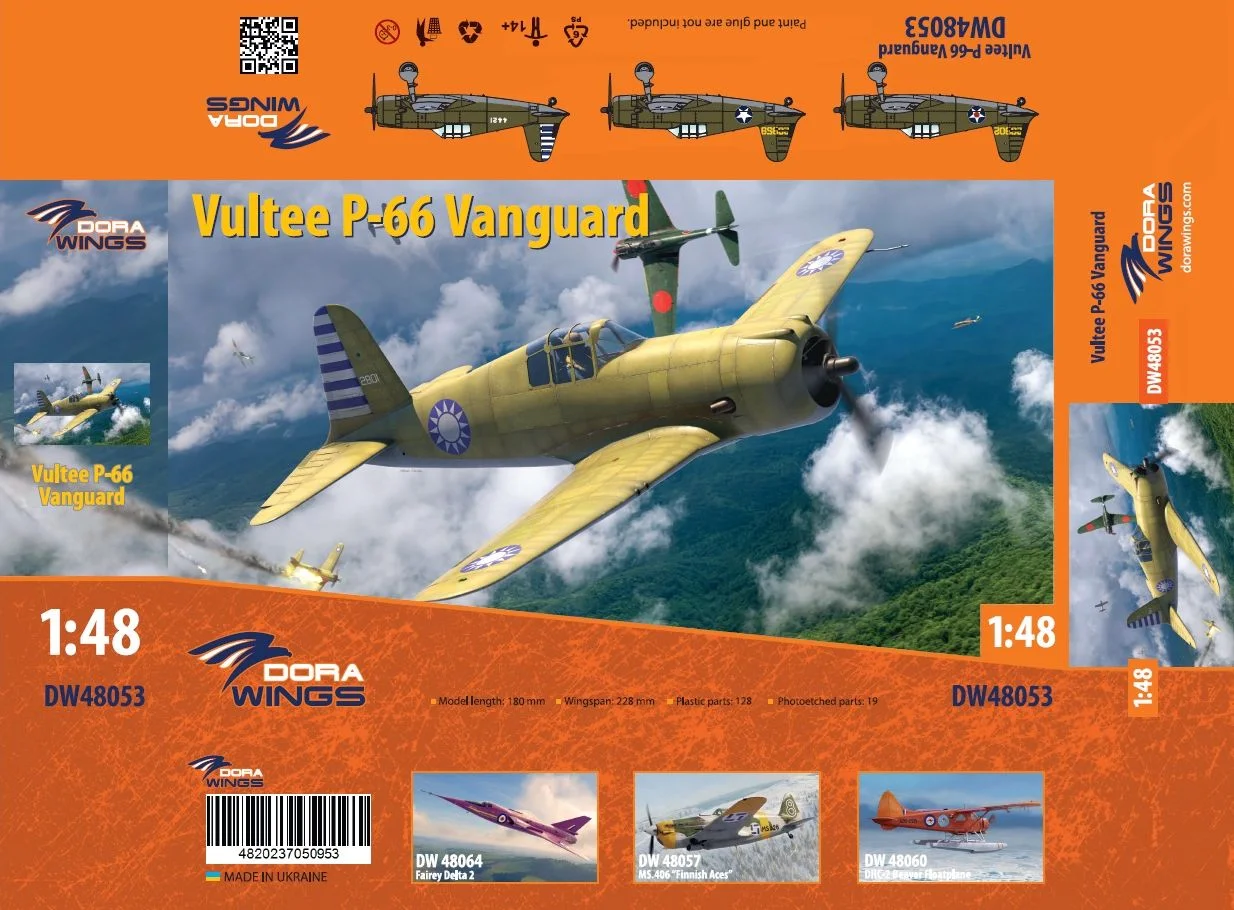
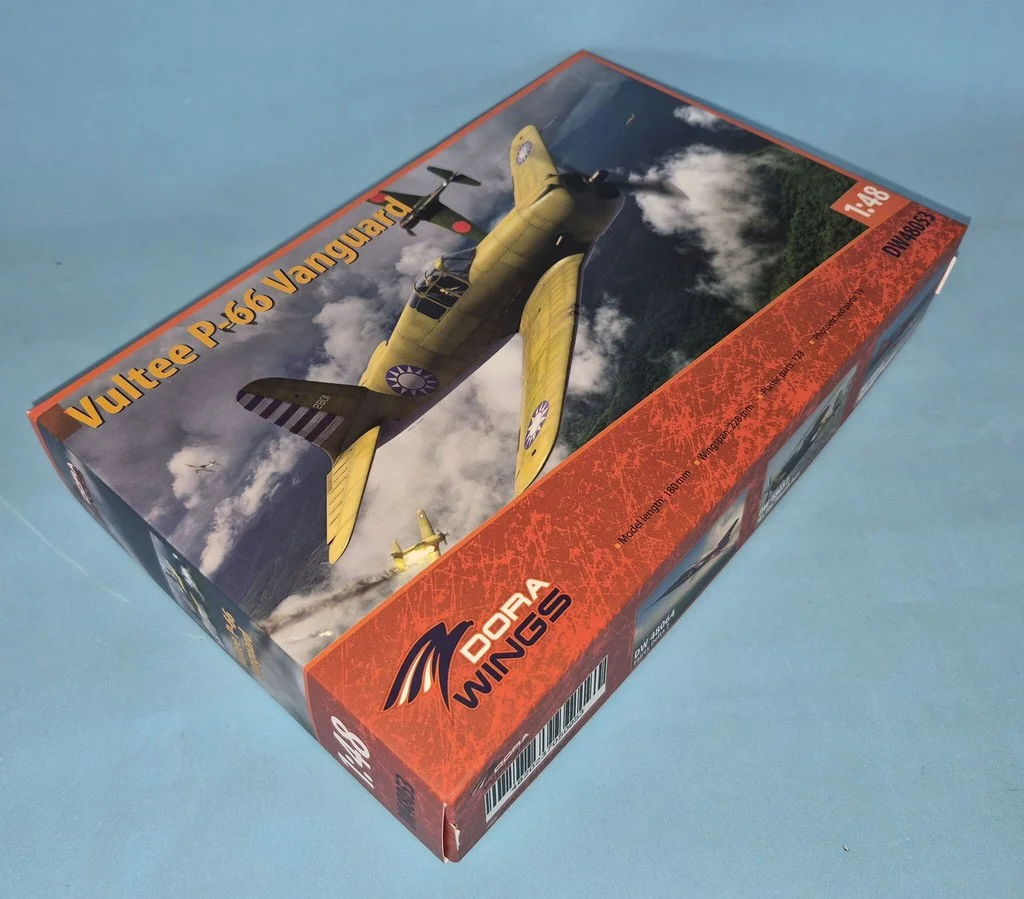
Plastic model kit of the American Vultee P-66 Vanguard fighter in 1:48 scale
Dora Wings 48053 represents the Vultee P-66 Vanguard – a single-seat fighter destined for Sweden that spent the war in Chinese Air Force service and with American training units. It is a rarely modelled aircraft with a distinctive silhouette: a low-wing monoplane with a radial engine in a tight cowling and a slender, streamlined fuselage.
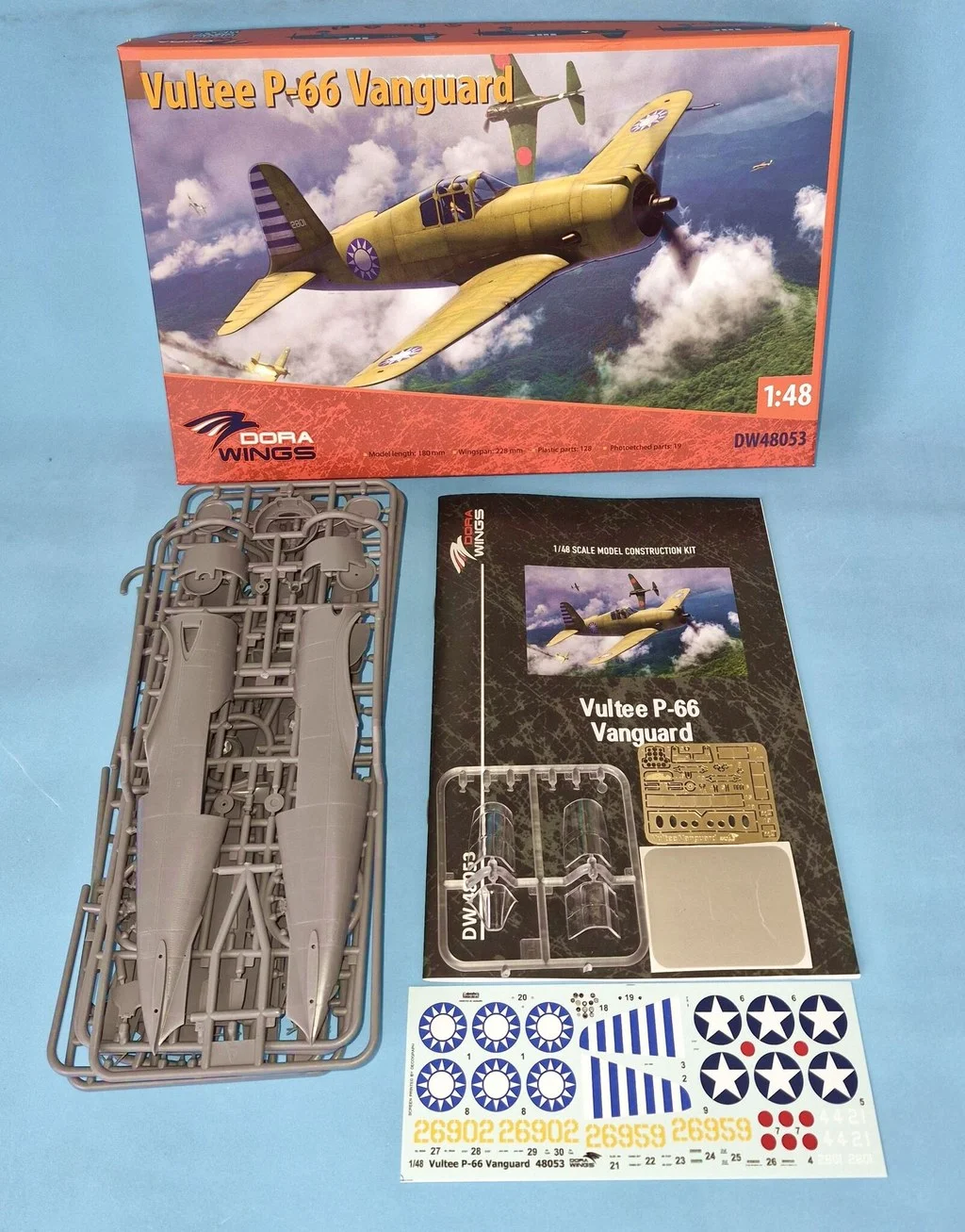
The kit is produced using short-run injection technology and features finely engraved panel lines. The manufacturer has provided a well-appointed cockpit with instrument panel, as well as a replica of the Pratt & Whitney R-1830 Twin Wasp radial engine visible through the cowling opening. Photo-etched parts and canopy masks are included in the box, so there is no need to source aftermarket accessories for these details.
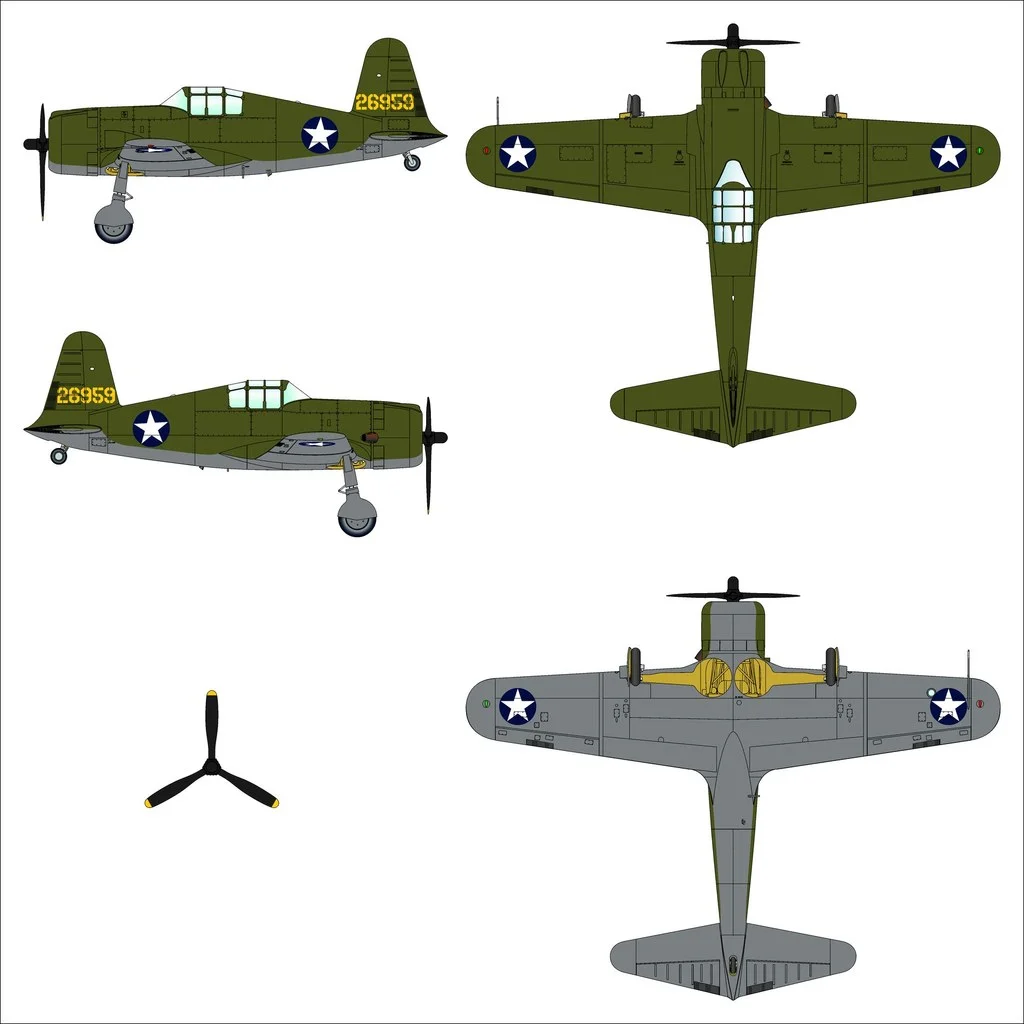
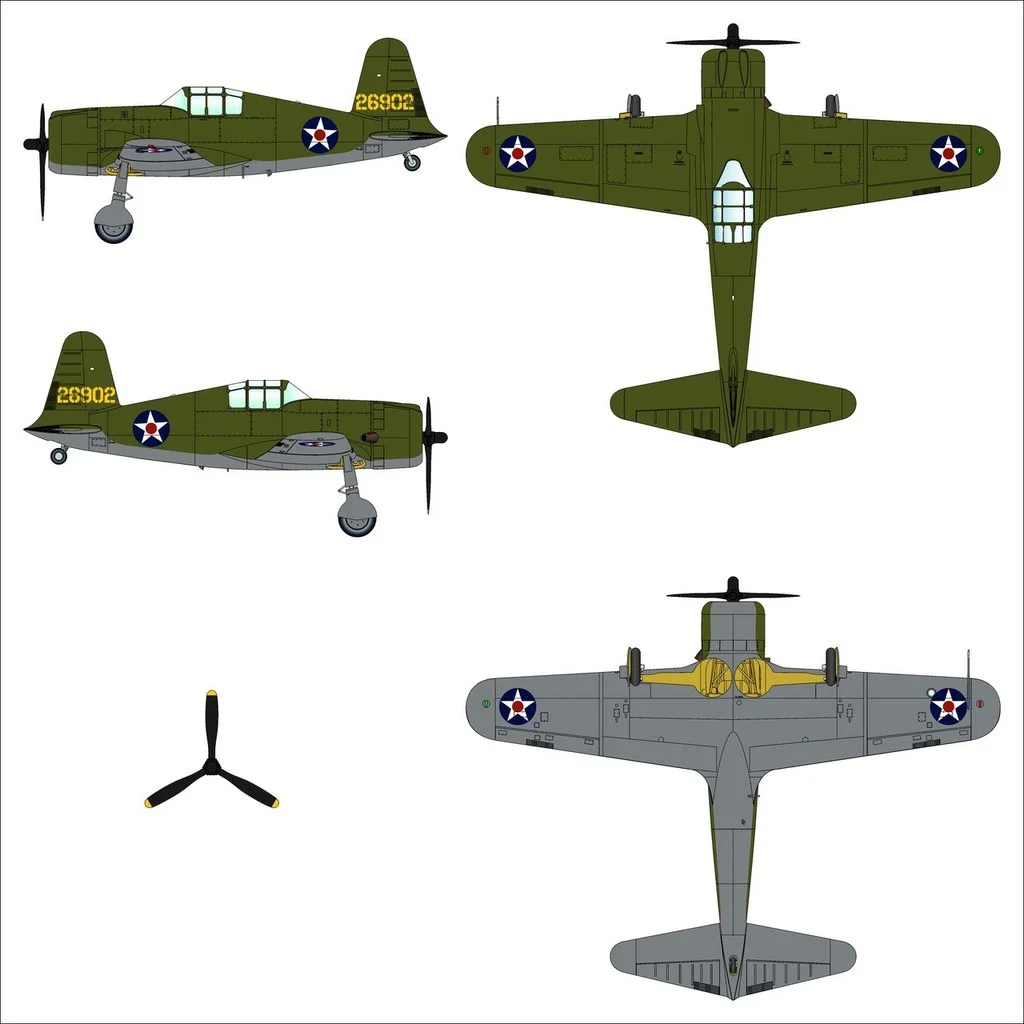
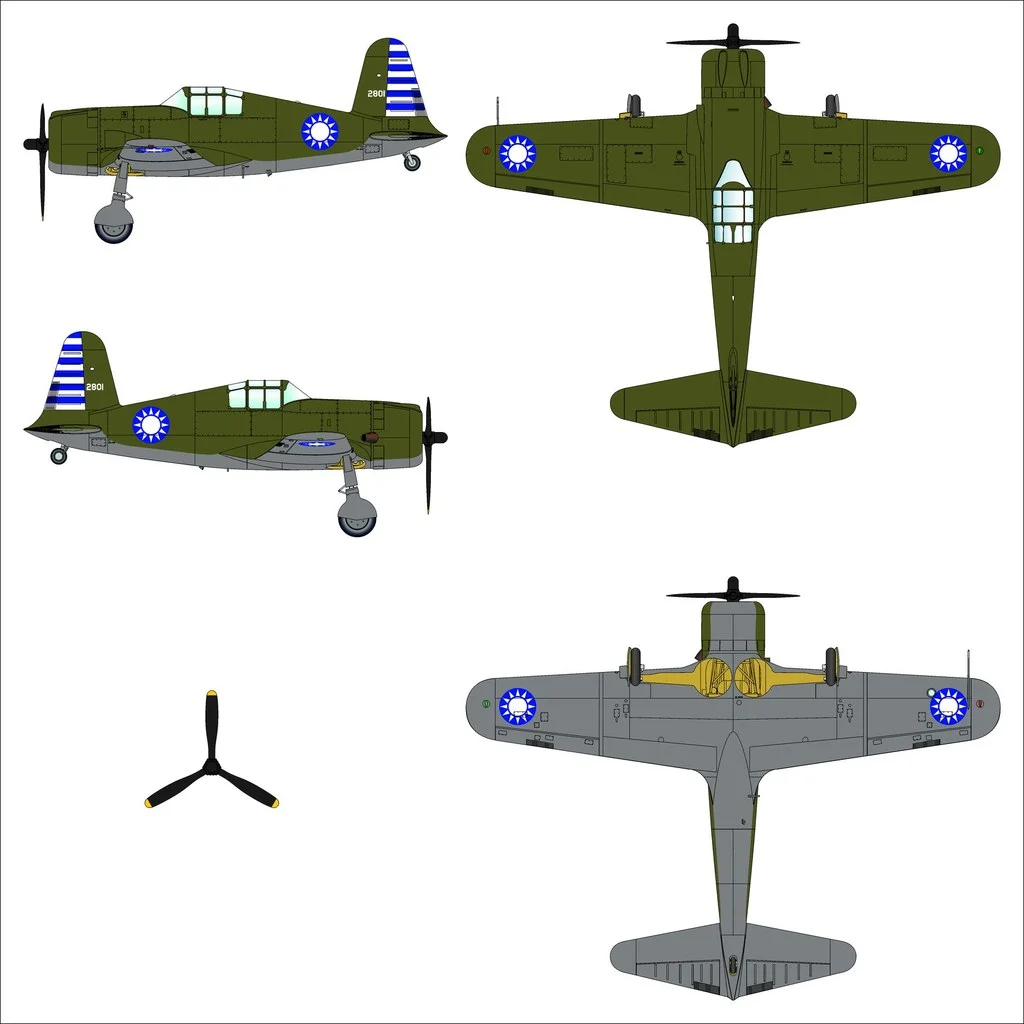
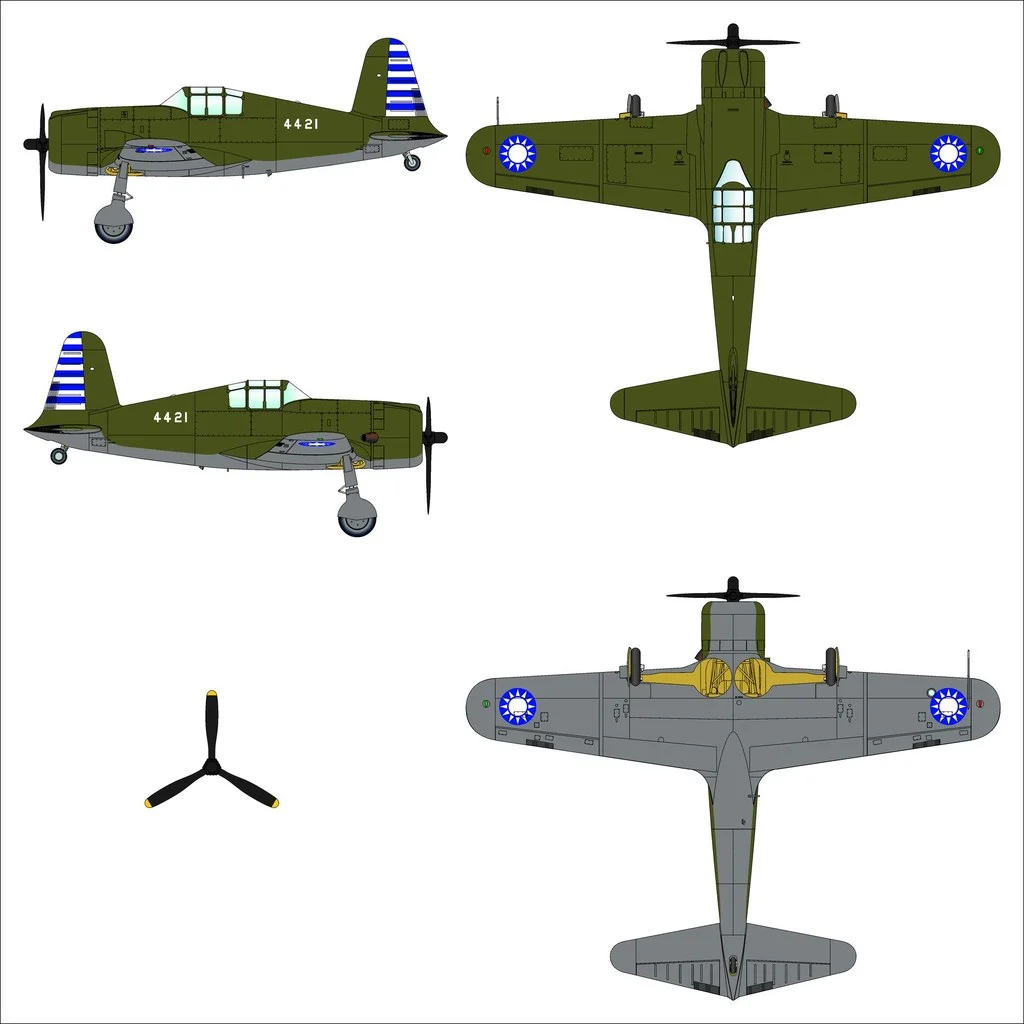
This boxing comes with a new decal sheet offering four marking options: two Chinese Air Force aircraft and two in USAAF markings.
What's in the box:
- Injection-moulded plastic sprues – 128 parts in total
- Clear parts for the canopy
- Photo-etched fret – 19 parts: seatbelts, cockpit details and exterior components
- Die-cut self-adhesive canopy masks
- Waterslide decal sheet for 4 marking options
- Illustrated assembly instructions
Kit specifications:
- Scale: 1:48
- Catalogue number: DW 48053
- Manufacturer: Dora Wings
- Assembled length: approx. 180 mm, wingspan: approx. 228 mm
- Parts count: 128 plastic + 19 photo-etched
- Skill level: intermediate/advanced
Please note: The kit does not include glue, paints or modelling tools. The model is intended for self-assembly.
Building the model:
This is a short-run kit, typical of manufacturers specialising in rare aircraft subjects. That means a slightly different approach than with mainstream kits: dry-fitting before gluing pays off, as does cleaning up mating edges and carefully preparing the fuselage halves where they join. The cockpit, along with the photo-etched seatbelts and instrument panel details, is easiest to paint and assemble before closing the fuselage. Cyanoacrylate glue and precision tweezers are useful for the delicate photo-etched components.
The included masks noticeably speed up painting the canopy framing. Both the Chinese and American schemes are based on typical US aircraft colours of the period: olive drab upper surfaces over neutral grey undersides; the instructions provide paint codes for each of the four schemes. Applying the decals over a gloss coat is recommended, as it limits silvering, with a satin varnish as a final finish – the usual choice for aircraft models. A light wash will emphasise the engraved panel lines, and for even sharper detail you may wish to consider aftermarket accessories sold separately, such as a turned metal pitot tube or a photo-etched detail set for this kit.
Tools you will need:
- Modelling side cutters for removing parts from the sprues
- Hobby knife or scalpel
- Files and sanding paper for cleaning up sprue gate marks
- Plastic cement (e.g. Tamiya Extra Thin Cement)
- Cyanoacrylate glue for photo-etched parts
- Precision modelling tweezers
- Modelling putty
- Brushes in various sizes
- Model paints (acrylic or enamel)
- Gloss varnish for decal application and satin varnish for the final finish
- Wash to emphasise details and recesses
About the aircraft – Vultee P-66 Vanguard:
Work on the Vultee V-48 fighter was started in 1938 by Richard W. Palmer, the company's chief engineer. The aircraft featured an all-metal semi-monocoque fuselage and fully retractable landing gear, powered by a Pratt & Whitney R-1830 Twin Wasp radial engine. The prototype flew in September 1939. Initially the engine was enclosed in a tight, streamlined cowling with the propeller set in a large spinner – a striking solution, but a troublesome one for cooling; after a landing accident in May 1940 the aircraft was rebuilt with a conventional cowling.
In February 1940 Sweden ordered 144 aircraft in the V-48C configuration. Production only began in September 1941, by which time the US government had embargoed the deliveries. Around fifty aircraft were retained domestically and sent to pursuit training bases on the West Coast and to the 14th Pursuit Group. The type proved demanding on landing – a tendency to ground-loop cost around fifteen airframes.
One hundred aircraft were taken over by the British as the Vanguard I, but after trials they were judged unsuitable even as trainers and passed on to China. Under Lend-Lease, 104 Vanguards were shipped to China via India by the end of 1942, many of them lost in transit or on the ground. Chinese squadrons entered combat from August 1943 with poor results against Japanese fighters; the Vanguard's silhouette was also mistaken for enemy types, adding further losses. The units were soon re-equipped with Curtiss P-40s. Production ended in April 1942 after fewer than 150 aircraft had been completed.
Specifications of the original aircraft (Vultee P-66 Vanguard):
- Length: 8.66 m
- Wingspan: 10.92 m
- Empty weight: approx. 2,375 kg
- Maximum take-off weight: approx. 3,349 kg
- Crew: 1
- Powerplant: Pratt & Whitney R-1830-33 Twin Wasp radial engine, 1,200 hp
- Maximum speed: approx. 547 km/h at approx. 4,600 m
- Range: approx. 1,370 km
- Service ceiling: approx. 8,600 m
- Armament: 2 × 12.7 mm machine guns and 4 × 7.62 mm machine guns
- Production: 144 aircraft ordered, series production September 1941 – April 1942
About the manufacturer – Dora Wings:
Dora Wings is a Ukrainian model manufacturer that has quickly established a recognisable position in the aircraft modelling market. The company specialises in subjects rarely tackled by the major brands – interwar designs, record-breaking aircraft, prototypes and lesser-known fighters and support aircraft of the Second World War. The kits are produced using short-run injection moulding, with engraved panel lines and carefully developed interior detail. A hallmark of the brand is a well-filled box: alongside the plastic sprues, the manufacturer routinely includes photo-etched frets and canopy masks, and in some kits also resin or 3D-printed components. The Dora Wings catalogue covers 1:32, 1:48 and 1:72 scales, often with several decal boxings covering different operators of a given type. The brand's kits are aimed primarily at modellers with some experience, who appreciate unusual subjects and accept a little more work on parts fit. For aviation enthusiasts, Dora Wings is today one of the few sources of plastic kits of many forgotten designs.
Other products in this category
-
€38.79
-
€38.55
-
€31.88
-
€41.64
-
€41.64
-
€32.12
-
€54.50
-
€45.21
-
€34.74
-
€38.55
-
€36.88
-
€38.55
-
€38.79
-
€38.79
-
€59.26
-
€42.83


Special offers
Check out all the deals
-
€15.69Regular price: €17.83-12%Lowest price: €17.83-12%
-
€9.41Regular price: €10.69-12%Lowest price: €10.69-12%
-
€11.50Regular price: €13.07-12%Lowest price: €13.07-12%
-
€22.82Regular price: €25.93-12%Lowest price: €25.93-12%
-
€15.69Regular price: €17.83-12%Lowest price: €17.83-12%
-
€123.60Regular price: €140.45-12%Lowest price: €140.45-12%
-
€27.01Regular price: €30.69-12%Lowest price: €30.69-12%
-
€39.16Regular price: €44.50-12%Lowest price: €44.50-12%
-
€23.03Regular price: €26.17-12%Lowest price: €26.17-12%
-
€19.67Regular price: €22.36-12%Lowest price: €22.36-12%
-
€54.04Regular price: €61.40-12%Lowest price: €61.40-12%
-
€28.47Regular price: €32.36-12%Lowest price: €32.36-12%
-
€15.06Regular price: €17.12-12%Lowest price: €17.12-12%
-
€16.74Regular price: €19.02-12%Lowest price: €18.55-10%
-
€28.47Regular price: €32.36-12%Lowest price: €32.36-12%
-
€22.40Regular price: €25.45-12%Lowest price: €25.45-12%


Bestsellers
-
€202.36Regular price: €238.07-15%Lowest price: €178.55--13%
-
€161.88
-
€66.64
-
€178.55
-
€249.98
-
€107.12
-
€166.64
-
€166.64
-
€321.40
-
€214.26
-
€190.45
-
€95.21
-
€492.83
-
€209.50
-
€214.26
-
€559.50


 Log in with Google

