





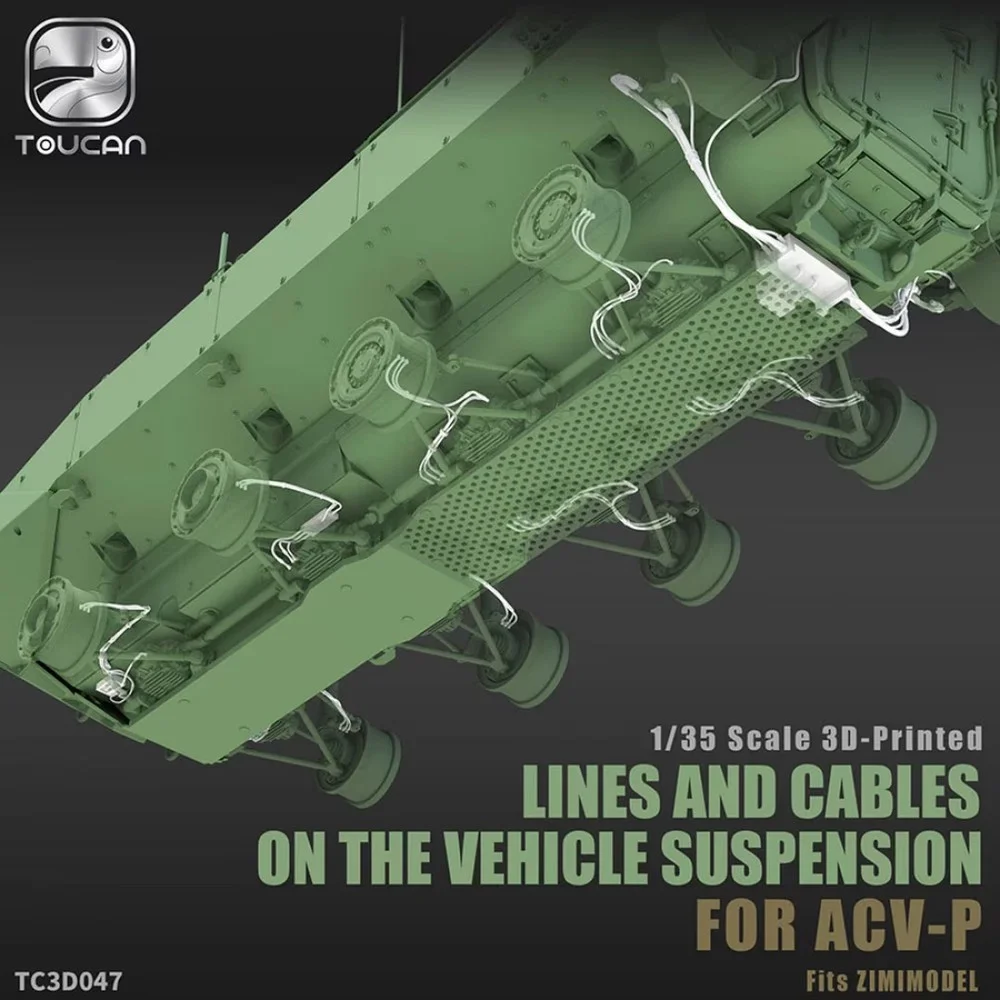


Zimi Model Toucan TC3D047 - 1:35 3D Printed Suspension Lines and Cables for ACV-P
Do darmowej dostawy brakuje Ci jedynie 299 zł
Masz darmową dostawę ✓
Product code: ZMTC-3D047
Barcode: 6978736090937
Ask about the product

Administratorem danych osobowych jest Sklep Modelarski Exito. Przetwarzamy je w celu przesłania odpowiedzi na zapytanie. Więcej informacji dotyczących przetwarzania danych osobowych znajduje się w polityce prywatności.
Share the product card



Leave feedback on the product

Description
3D printed suspension lines and cables set for the ACV-P kit (Zimi Model) in 1:35 scale
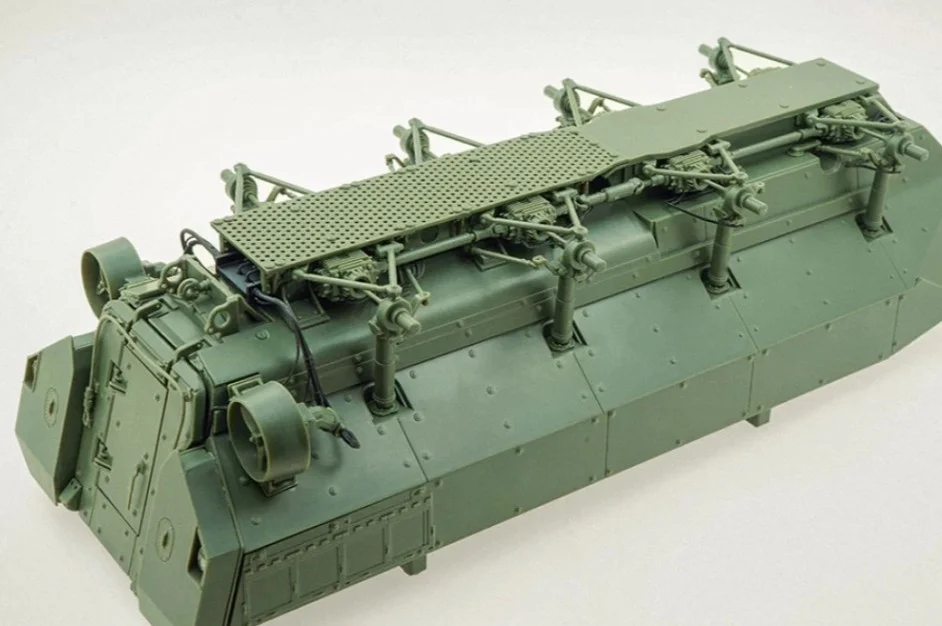
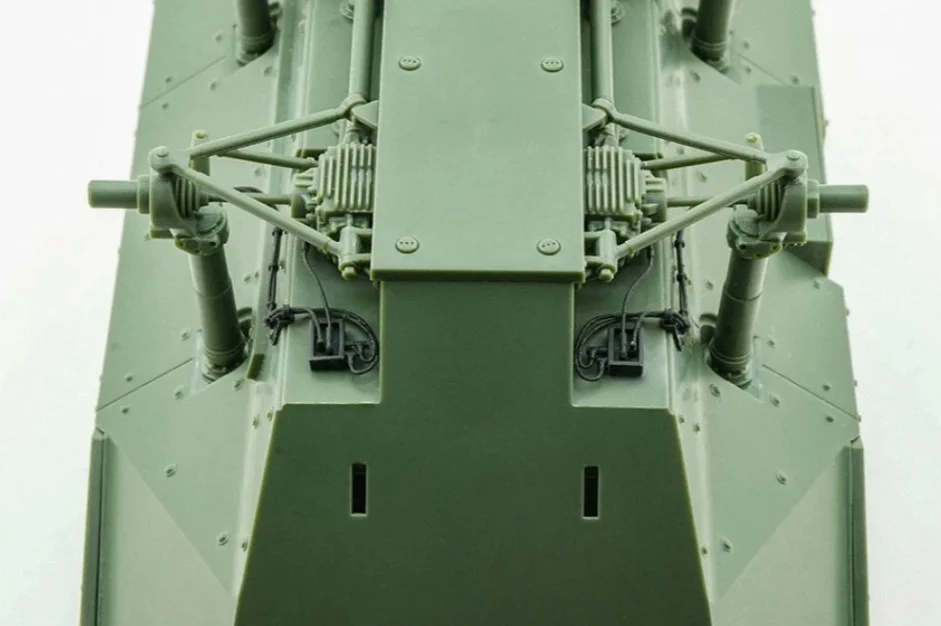
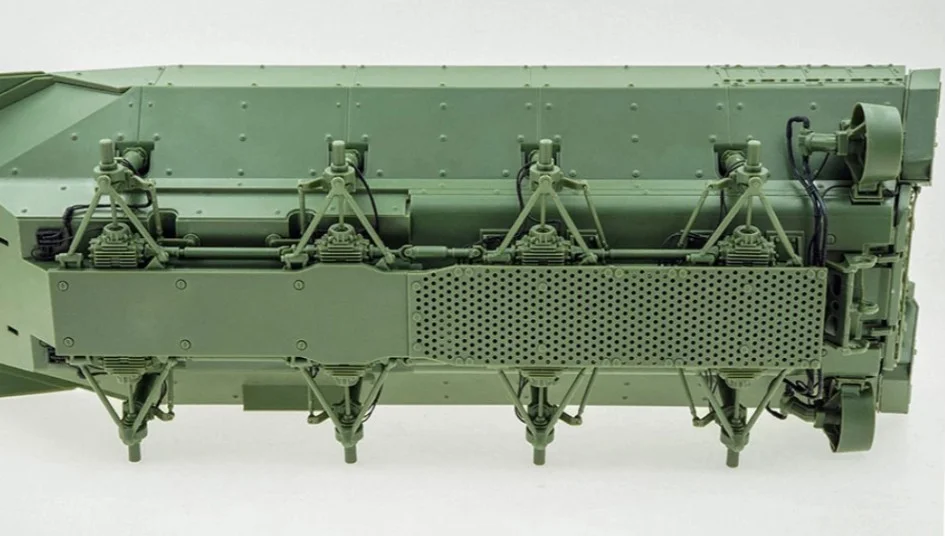
Toucan TC3D047 is a detail set for the 1:35 Zimi Model kit of the ACV-P amphibious wheeled carrier. It adds the lines and cables running within the suspension area — elements that are clearly visible on the real vehicle between the hull and the wheel hubs, but which an injection-moulded kit must necessarily simplify or omit.
The ACV running gear is a particularly rewarding place for this kind of addition: the vehicle has independent suspension on all eight wheels and a central tyre inflation system, which translates into extensive plumbing routed along the suspension components. Adding this detail noticeably increases the sense of depth in an area that sits at eye level when the model is displayed on a base or in a diorama.
What's in the box:
- 3D printed resin parts reproducing the lines and cables within the suspension area
Set specifications:
- Scale: 1:35
- Catalogue number: TC3D047
- Manufacturer: Toucan
- Intended for: ACV-P by Zimi Model (35201)
- Type: suspension lines and cables
- Material / technology: resin, 3D printed
3D printed parts – detail unattainable in injection moulding
3D printing in resin makes it possible to reproduce shapes that injection moulding simply cannot deliver: thin cables, openwork structures, parts with complex three-dimensional geometry and details a fraction of a millimetre thick. An injection mould requires every part to be extractable from a split tool, which imposes simplifications and compromises. A print is built up layer by layer without such constraints, so the parts retain full three-dimensionality.
Printed parts come attached to fine supports which need to be removed — most conveniently with a sharp hobby knife or a fine saw, with any remaining marks smoothed using fine sanding paper. Resin is harder and more brittle than polystyrene, so small parts are best separated carefully while held with tweezers. Cyanoacrylate glue is used for assembly, as polystyrene cement has no effect on resin. Washing the parts in warm water with a little detergent before painting is recommended, to remove any residue from the production process, followed by a coat of primer, which noticeably improves paint adhesion.
About the vehicle – ACV (Amphibious Combat Vehicle):
The ACV is an 8x8 wheeled armoured personnel carrier developed jointly by BAE Systems and IVECO Defence Vehicles on the basis of the Italian SuperAV design. It won the United States Marine Corps competition decided in 2018 and is replacing the veteran tracked AAV amphibious carriers in service since 1972. The earlier Expeditionary Fighting Vehicle programme was cancelled on grounds of cost and technical complexity, so the ACV was conceived as a more conservative but technically mature solution.
The design combines amphibious capability with the protection typical of modern mine-resistant vehicles: the hull has a V-shaped bottom, the troop seats are suspended and absorb blast energy, and the armour protects against mines, improvised explosive devices, small arms fire and fragments. All eight wheels have independent suspension, and a central tyre inflation system allows pressure to be matched to the terrain without leaving the vehicle. Power comes from a six-cylinder IVECO Cursor diesel of around 700 hp coupled to an Allison automatic transmission.
The ACV-P (Personnel) variant is the basic troop carrier, accommodating a crew of three and thirteen embarked marines. Armament consists of a remote weapon station with an M2 12.7 mm heavy machine gun or a Mk 19 40 mm automatic grenade launcher. The first vehicles were delivered in October 2020 and full-rate production began in December of the same year. The family also includes the ACV-C command variant, the ACV-30 with a turret and 30 mm automatic cannon, and the ACV-R recovery vehicle.
Original vehicle specifications (ACV-P):
- Length: approx. 8.9 m
- Width: approx. 3.1 m
- Height: approx. 2.8 m
- Gross vehicle weight: approx. 30.6 t
- Crew: 3 plus 13 embarked troops
- Powerplant: IVECO Cursor diesel of around 700 hp
- Transmission: Allison 4800SP automatic
- Drivetrain: 8x8 with independent suspension on all wheels and a central tyre inflation system
- Maximum road speed: over 105 km/h
- Water speed: approx. 6 knots
- Land range: up to approx. 520 km
- Armament: remote weapon station with an M2 12.7 mm machine gun or Mk 19 40 mm grenade launcher
- Protection: V-shaped hull bottom, mine and fragmentation protection
- Manufacturers: BAE Systems and IVECO Defence Vehicles
- Entered service: 2020 (US Marine Corps)
About the manufacturer – Toucan:
Toucan is a Chinese aftermarket brand active since 2024, operating within the Zimi Model group alongside Panda, Kitty Hawk and DRAMi. Its range covers two lines: conversion sets numbered in the TC35xxx series and 3D printed detail sets in the TC3Dxxx series. The brand concentrates on complementing base kits from the group's own catalogue, which means its sets are designed directly around specific sprues rather than adapted to them afterwards. The Toucan catalogue is dominated by exterior details for wheeled and tracked vehicles, aircraft weapons, helicopter rotor and interior components, and weighted tyres — precisely the parts that are hardest to reproduce faithfully in injection moulding.
Other products in this category
-
€34.02
-
€10.93
-
€23.31
-
€35.69
-
€8.79
-
€17.83
-
€60.69
-
€22.36
-
€10.21
-
€17.83
-
€17.83
-
€8.79
-
€17.36
-
€7.36
-
€17.83
-
€4.41Lowest price: €4.41-0%


Special offers
Check out all the deals
-
€33.50Regular price: €38.07-12%Lowest price: €38.07-12%
-
€71.22Regular price: €80.93-12%Lowest price: €71.22-0%
-
€9.62Regular price: €10.93-12%Lowest price: €9.62-0%
-
€140.36Regular price: €159.50-12%Lowest price: €159.50-12%
-
€67.03Regular price: €76.17-12%Lowest price: €64.74--4%
-
€6.26Regular price: €7.12-12%Lowest price: €6.26-0%
-
€20.93Regular price: €23.79-12%Lowest price: €20.93-0%
-
€10.04Regular price: €11.40-12%Lowest price: €10.04-0%
-
€9.41Regular price: €10.69-12%Lowest price: €9.41-0%
-
€7.31Regular price: €8.31-12%Lowest price: €7.31-0%
-
€3.54Regular price: €4.02-12%Lowest price: €4.02-12%
-
€11.50Regular price: €13.07-12%Lowest price: €13.07-12%
-
€10.87Regular price: €12.36-12%Lowest price: €12.36-12%
-
€2.91Regular price: €3.31-12%Lowest price: €2.91-0%
-
€2.91Regular price: €3.31-12%Lowest price: €3.31-12%
-
€4.80Regular price: €5.45-12%Lowest price: €4.80-0%


Bestsellers
-
€202.36Regular price: €238.07-15%Lowest price: €178.55--13%
-
€161.88
-
€66.64
-
€178.55
-
€249.98
-
€107.12
-
€166.64
-
€166.64
-
€321.40
-
€214.26
-
€190.45
-
€95.21
-
€492.83
-
€209.50
-
€214.26
-
€559.50


 Log in with Google

