







Arma Hobby 70007 - 1:72 PZL P.7a 1939 - Expert Set
Do darmowej dostawy brakuje Ci jedynie 299 zł
Masz darmową dostawę ✓
Product code: ARMH-70007
Barcode: 5902734372963
Ask about the product

Administratorem danych osobowych jest Sklep Modelarski Exito. Przetwarzamy je w celu przesłania odpowiedzi na zapytanie. Więcej informacji dotyczących przetwarzania danych osobowych znajduje się w polityce prywatności.
Share the product card



Leave feedback on the product

Description
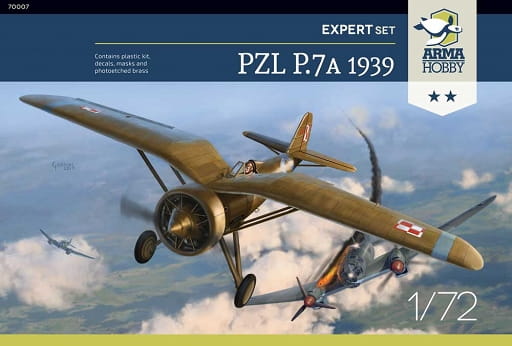
Plastic model kit of the Polish PZL P.7a fighter aircraft in 1:72 scale – 1939 Expert Set
By September 1939 the PZL P.7a was already an obsolete machine, yet its pilots still went into action over Poland. The 70007 Expert Set is devoted entirely to marking options from the September campaign.
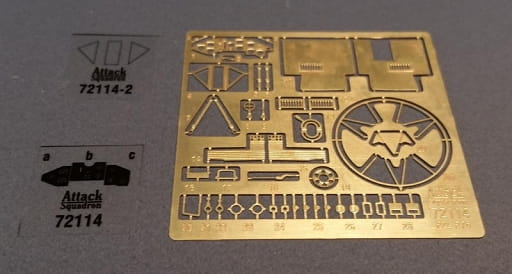
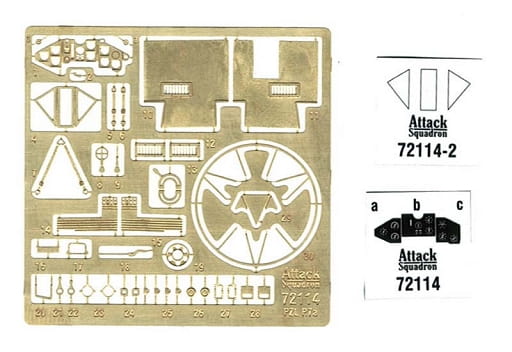
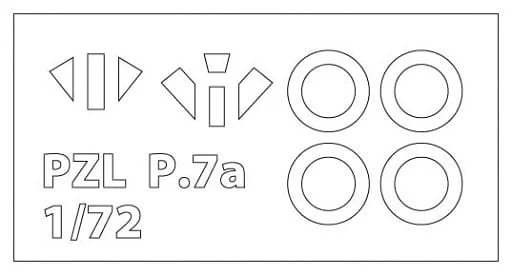
The 1:72 model reproduces the parasol monoplane silhouette with the "Polish wing", the corrugated skin texture and the fixed undercarriage. The box contains photo-etched parts and self-adhesive masks for the windscreen and wheels, which make a precise finish easier to achieve.
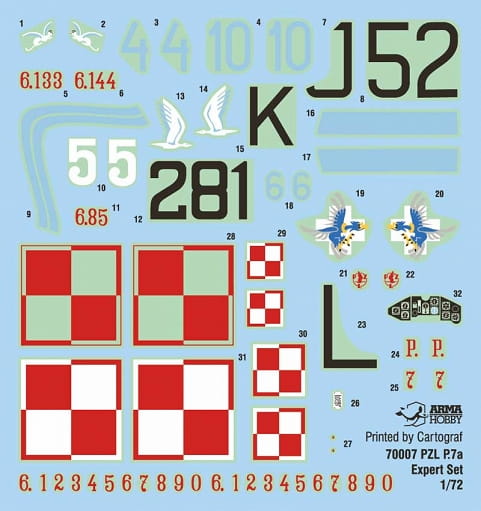
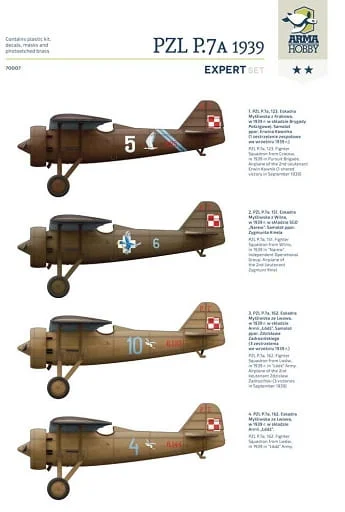
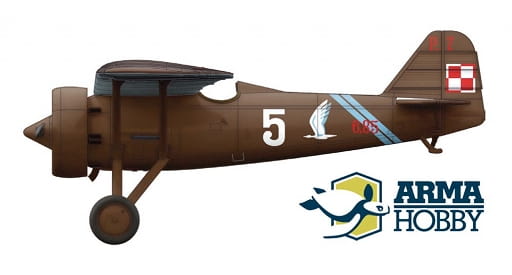
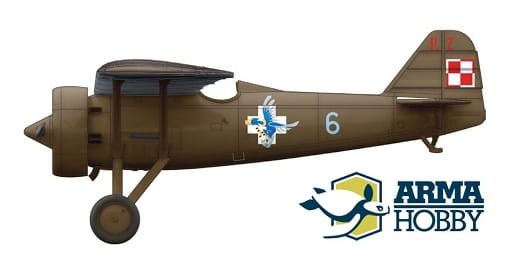
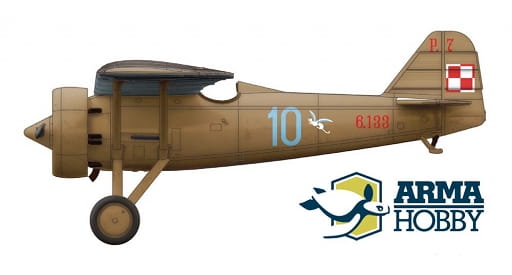
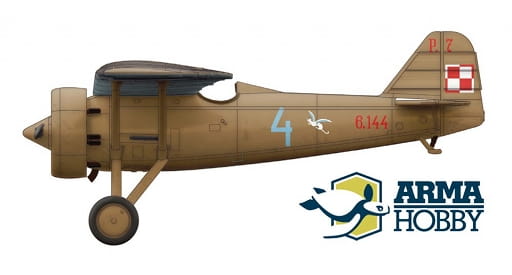
The decals cover four options: the aircraft of 2nd Lt Erwin Kawnik of the 123rd Fighter Squadron within the Pursuit Brigade; the machine of 2nd Lt Zygmunt Kinel of the 151st Fighter Squadron from Wilno, attached to the Narew Independent Operational Group; the aircraft of 2nd Lt Zdzisław Zadroziński of the 162nd Fighter Squadron from Lwów, fighting with the Łódź Army; and a second machine of the 162nd Fighter Squadron from Lwów with the Łódź Army.
What's in the box:
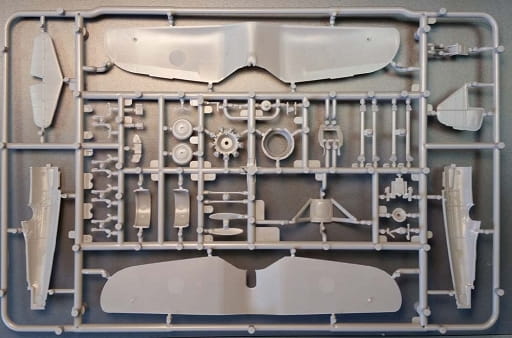
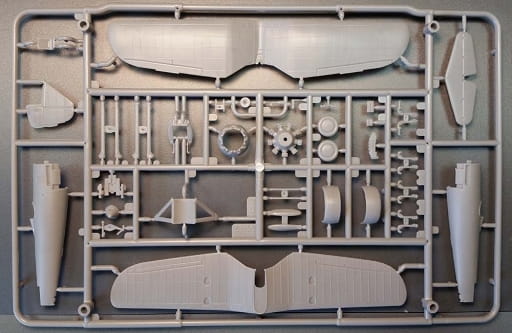
- Plastic sprues with the airframe parts
- Sprue with the transparent parts
- Photo-etched parts
- Self-adhesive masks for the windscreen and wheels
- Decals for four marking options
- Illustrated assembly instructions
Kit specifications:
- Scale: 1:72
- Catalogue number: 70007
- Manufacturer: Arma Hobby
- Model length when assembled: approx. 99 mm
- Model wingspan: approx. 143 mm
- Skill level: intermediate (photo-etched parts, small details)
Please note: glue, paints and modelling tools are not included. The model requires assembly.
Building the model:
The model has a manageable parts count and good fit; the cockpit and the small photo-etched details need the most attention. We suggest painting and finishing the interior before joining the fuselage halves, as it remains clearly visible in the open cockpit. When fitting the wing on the struts connecting it to the fuselage, work calmly and check the symmetry.
All four 1939 options are painted in Polish khaki on the upper and side surfaces with light blue-grey undersides – a good opportunity to use a wash and gentle shading to emphasise the corrugated skin. Applying the decals over a gloss coat limits silvering, and a satin varnish suits the final finish. The rigging is made by the modeller, usually from fine thread or wire.
Tools you will need:
- Modelling side cutters for removing parts from the sprues
- Hobby knife or scalpel
- Files and sanding paper for cleaning up gate marks
- Plastic cement (e.g. Tamiya Extra Thin Cement)
- Cyanoacrylate glue for the photo-etched parts
- Precision modelling tweezers
- Brushes in various sizes or an airbrush
- Modelling paints (acrylic or enamel)
- A wash to emphasise panel lines and details
- Gloss varnish under the decals and a satin coat for the final finish
About the aircraft – PZL P.7a:
The PZL P.7a was one of the first production fighters of all-metal construction, developed from the P.6 and P.7 prototypes designed by Zygmunt Puławski. It used the same parasol monoplane layout with the "Polish wing" that gave the pilot excellent visibility, and was powered by a licence-built Škoda-Bristol Jupiter VII F radial. Series production ran in 1932–1933 and close to 150 aircraft were completed.
Once the P.7a entered service, Polish aviation became one of the first air forces in the world equipped solely with all-metal fighters. Until the mid-1930s the type was the standard equipment of the fighter squadrons, after which it gradually gave way to the newer P.11 and passed to training units – among them the Air Force Cadet School at Dęblin and the aerial gunnery schools.
In September 1939 P.7a fighters were still serving with several front-line squadrons and with training units, and despite being far slower than their opponents their pilots managed to score aerial victories. Some aircraft were evacuated to Romania, where they were used for training, while a few captured examples fell into Luftwaffe hands and were used at the Dęblin airfield.
Original aircraft specifications (PZL P.7a):
- Type: single-seat fighter, parasol monoplane
- Length: 7.16 m
- Wingspan: 10.30 m
- Crew: 1
- Powerplant: Škoda-Bristol Jupiter VII F radial engine of approx. 527 hp
- Armament: 2 x 7.92 mm machine guns (Vickers wz. E, wz. 33 in later production batches)
- Maximum speed: 317 km/h
About the manufacturer – Arma Hobby:
Arma Hobby is a Polish plastic kit manufacturer based in Warsaw, releasing kits under its own name since 2016. The brand is a continuation of Attack Squadron, previously known for resin accessories for aircraft models. Projects are prepared digitally and supported by scanning of surviving airframes, while the injection moulds are made in Poland. The kits are recognisable by their finely rendered airframe surfaces, thin trailing edges, well-executed glazing and high-quality decal sheets. The range concentrates on 1:72 and 1:48 and covers primarily Polish aviation – the PZL P.7a, PZL P.11c and TS-11 Iskra – as well as Allied aircraft of the Second World War. Kits from this brand have repeatedly been recognised in industry awards, including the Model of the Year title at the Nuremberg fair. In parallel, the manufacturer develops 3D-printed parts and files intended for home printing.
Safety warnings
Certificates and safety warnings
- Product not for children under 14 years of age. Use under adult supervision.
- Contains small parts that may present a choking hazard.
- Contains sharp-edged elements.
- Keep out of reach of pets.
Manufacturer
Arma Hobby S.C.
Ostrobramska 101/200
04-041 Warszawa, Poland
Produkty powiązane


Other products in this category
-
€28.31
-
€20.30Lowest price: €20.30-0%
-
€29.26
-
€59.50
-
€18.00Lowest price: €18.00-0%
-
€17.16Lowest price: €17.16-0%
-
€27.83
-
€23.55
-
€17.16Lowest price: €17.16-0%
-
€32.12
-
€19.26
-
€19.67Lowest price: €19.67-0%
-
€26.17
-
€16.32Lowest price: €16.32-0%
-
€20.21
-
€22.36


Special offers
Check out all the deals
-
€28.26Regular price: €32.12-12%Lowest price: €32.12-12%
-
€30.78Regular price: €34.98-12%Lowest price: €34.98-12%
-
€77.08Regular price: €87.60-12%Lowest price: €87.60-12%
-
€49.85Regular price: €56.64-12%Lowest price: €56.64-12%
-
€13.39Regular price: €15.21-12%Lowest price: €15.21-12%
-
€15.69Regular price: €17.83-12%Lowest price: €15.69-0%
-
€26.59Regular price: €30.21-12%Lowest price: €26.59-0%
-
€31.41Regular price: €35.69-12%Lowest price: €35.69-12%
-
€26.59Regular price: €30.21-12%Lowest price: €26.59-0%
-
€26.17Regular price: €29.74-12%Lowest price: €29.74-12%
-
€23.45Regular price: €26.64-12%Lowest price: €26.64-12%
-
€22.40Regular price: €25.45-12%Lowest price: €25.45-12%
-
€17.37Regular price: €19.74-12%Lowest price: €19.74-12%
-
€62.84Regular price: €71.40-12%Lowest price: €71.40-12%
-
€27.22Regular price: €30.93-12%Lowest price: €30.93-12%
-
€24.07Regular price: €27.36-12%Lowest price: €27.36-12%


Bestsellers
-
€202.36Regular price: €238.07-15%Lowest price: €178.55--13%
-
€161.88
-
€66.64
-
€178.55
-
€214.26
-
€249.98
-
€107.12
-
€95.21
-
€166.64
-
€190.45
-
€166.64
-
€321.40
-
€285.69
-
€492.83
-
€214.26
-
€559.50


 Log in with Google

