





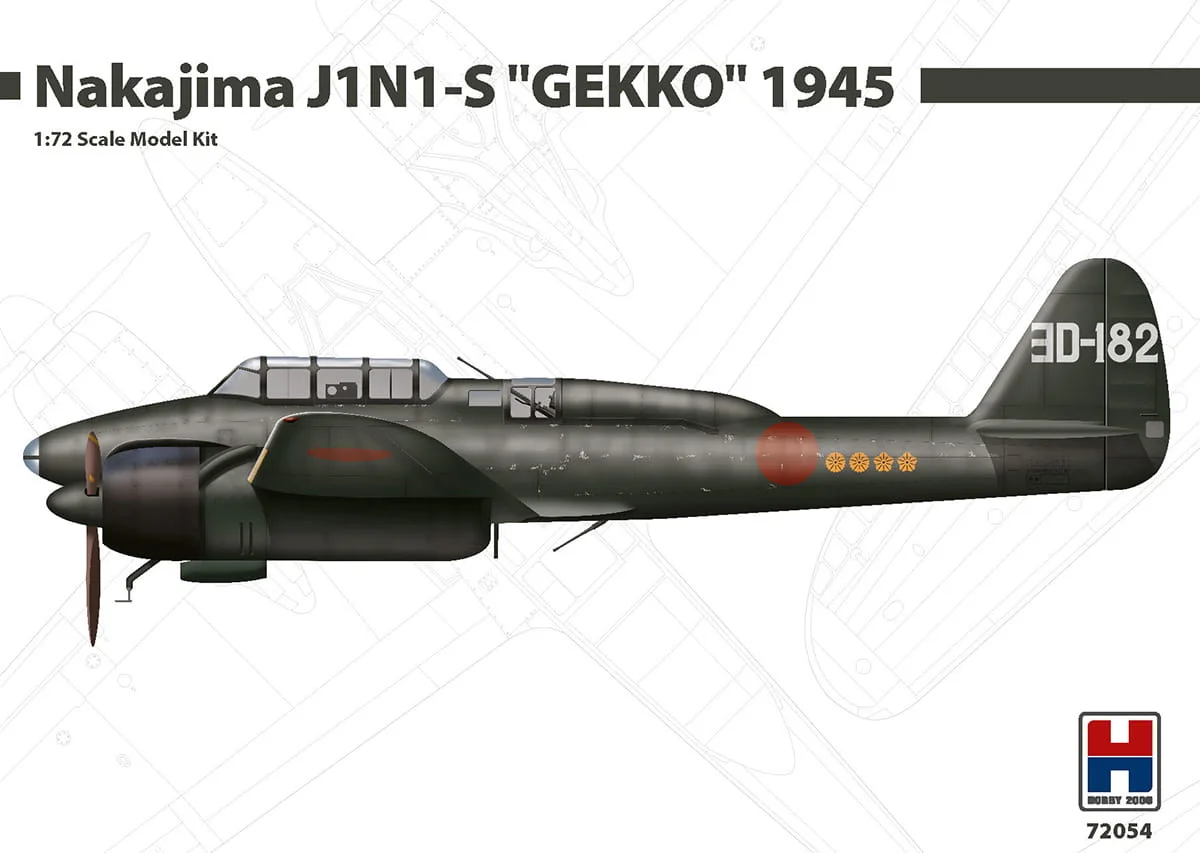


Hobby 2000 72054 - 1:72 Nakajima J1N1-S Gekko 1945
Do darmowej dostawy brakuje Ci jedynie 299 zł
Masz darmową dostawę ✓
Product code: H2K-72054
Barcode: 5903002057544
Ask about the product

Administratorem danych osobowych jest Sklep Modelarski Exito. Przetwarzamy je w celu przesłania odpowiedzi na zapytanie. Więcej informacji dotyczących przetwarzania danych osobowych znajduje się w polityce prywatności.
Share the product card



Leave feedback on the product

Description
1:72 scale plastic model kit of the Japanese Nakajima J1N1-S Gekko 1945 night fighter
Hobby 2000 72054 represents the Nakajima J1N1-S Gekko in its late-war configuration, when Japanese night fighters concentrated on defending the Home Islands against B-29 raids. The twin-engine machine with obliquely mounted 20 mm cannon was one of the few night defence tools available, although its performance was barely sufficient to intercept the Superfortress.
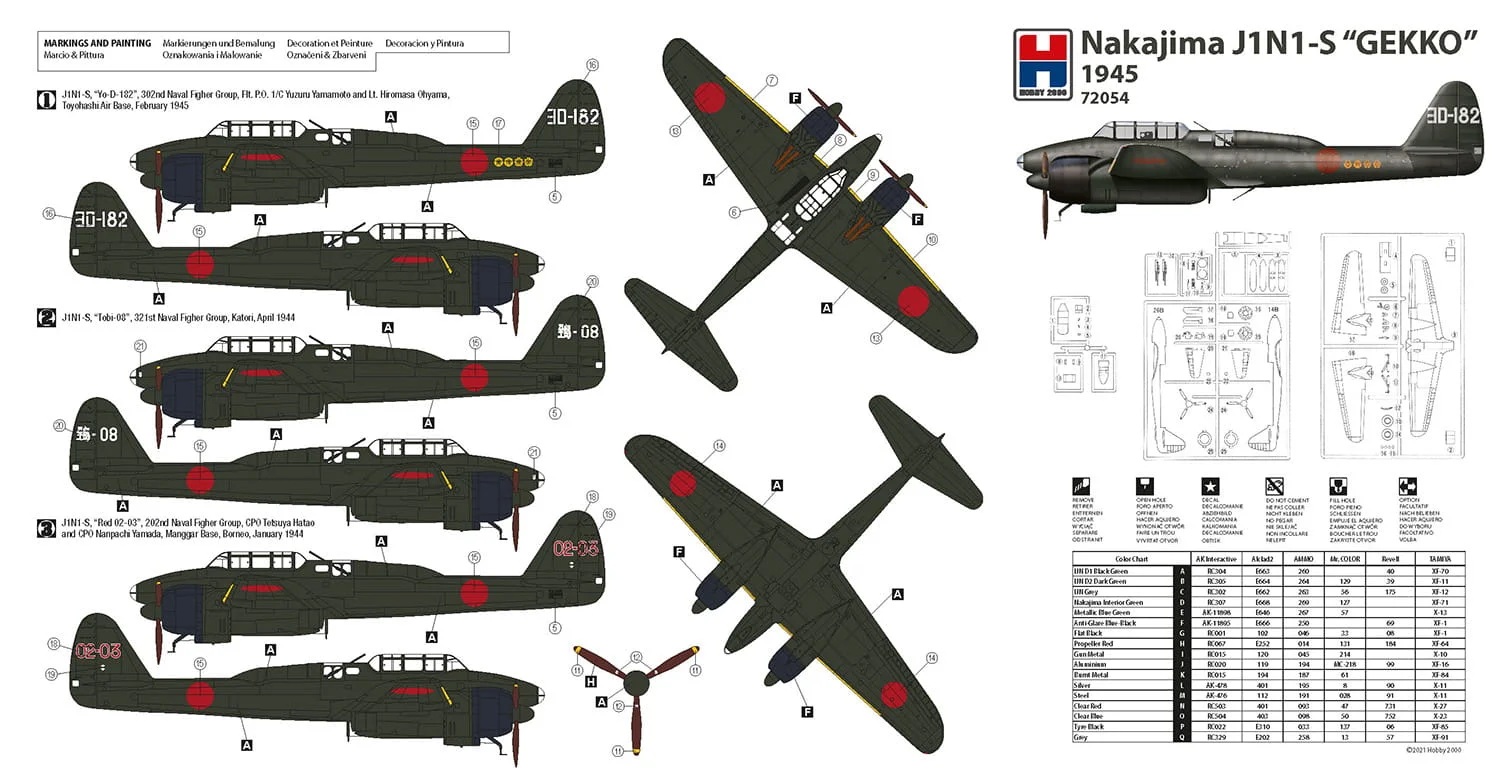
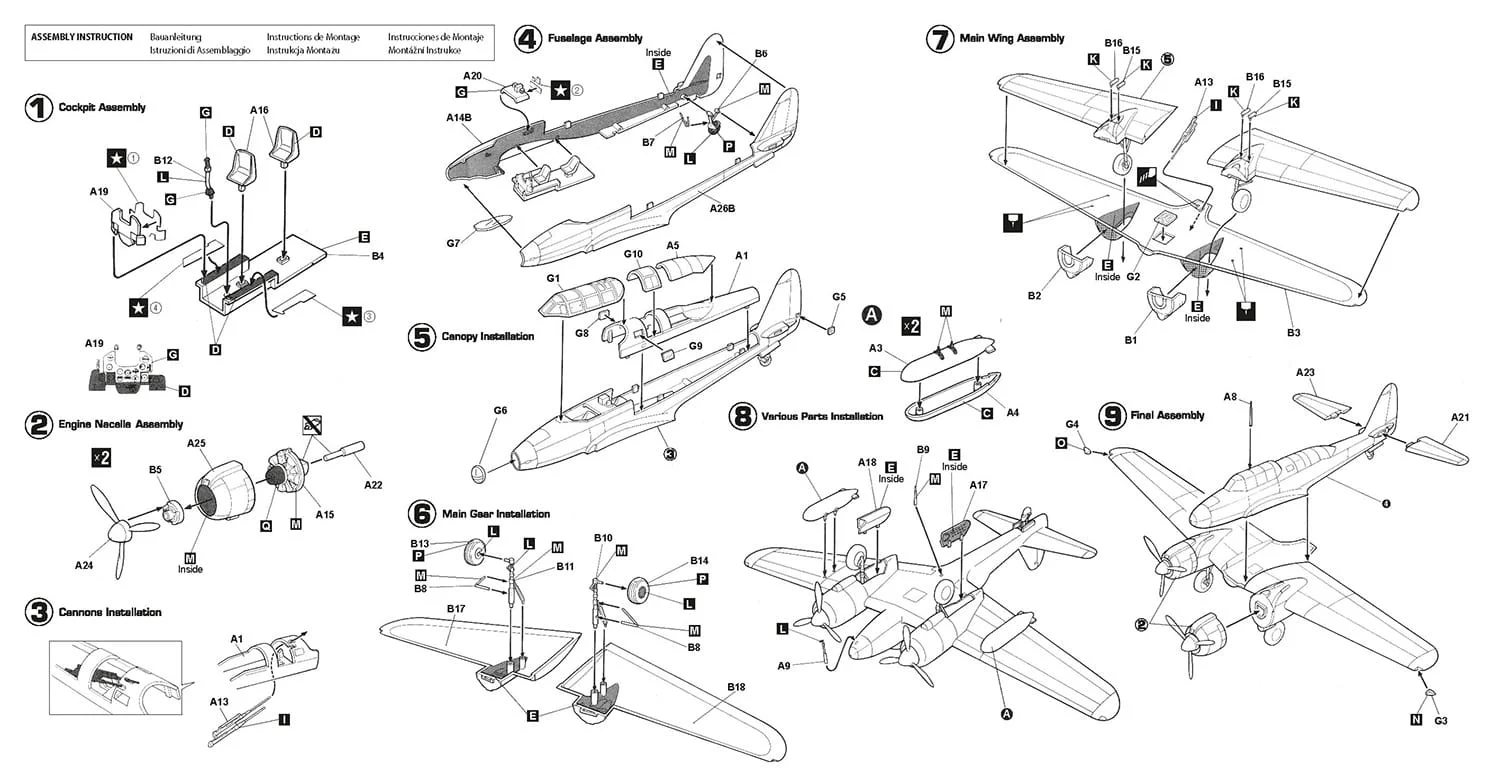
The kit is based on 1:72 Fujimi plastic with recessed panel lines and a well-rendered long canopy. Hobby 2000 has added its own illustrated assembly manual and a new sheet of waterslide decals printed by Cartograf covering three marking options from 1944-1945.
What's in the box:
- Plastic sprues (Fujimi)
- Clear parts for the long canopy
- Sheet of waterslide decals printed by Cartograf for 3 marking options
- Illustrated assembly manual
Model specifications:
- Scale: 1:72
- Catalogue number: 72054
- Manufacturer: Hobby 2000
- Assembled length: approx. 169 mm
- Assembled wingspan: approx. 236 mm
- Skill level: intermediate
Note: The kit does not include glue, paints or modelling tools. This model is intended for self-assembly.
Assembly:
The Fujimi plastic has recessed panel lines and well-fitting major assemblies, so the build progresses calmly. The long multi-part canopy needs the most attention — it is worth finishing both cockpit stations first, as they remain clearly visible, and painting the frames in several thin coats. The obliquely mounted cannon in the fuselage spine are the defining feature of the night fighter version, so even alignment and a clean finish there pay off.
For painting you will need the typical late-war Japanese naval colours: dark green upper surfaces and light grey undersides with red hinomaru markings. Aircraft in 1945 were heavily worn, so paint chipping and staining around the engine nacelles look very natural on the model. Applying the decals over a gloss coat is recommended, as it limits decal silvering, with a satin varnish for the final finish.
Tools you will need:
- Modelling nippers for removing parts from the sprues
- Hobby knife or scalpel
- Files and sanding paper for cleaning up sprue gate marks
- Plastic cement (e.g. Tamiya Extra Thin Cement)
- Precision modelling tweezers
- Brushes in various sizes or an airbrush
- Model paints (acrylic or enamel)
- Gloss varnish under the decals and satin varnish for the final finish
- Wash for emphasising panel lines and details
About the aircraft – Nakajima J1N1-S Gekko:
The Nakajima J1N was designed in the late 1930s as a long-range escort fighter for the Japanese naval air service. The twin-engine layout proved insufficiently agile to fight enemy single-engine fighters, so the type was initially assigned to reconnaissance duties as the J1N1-C.
The turning point came in 1943 at Rabaul, where the local unit commander proposed arming the reconnaissance aircraft with cannon firing obliquely upwards and downwards. The arrangement allowed attacks on American bombers from below, outside the field of fire of their defensive positions. Early successes against B-17s and B-24s convinced the command to introduce a production night fighter version, designated J1N1-S and named "Gekko", meaning moonlight. The Allies gave it the code name "Irving".
The Gekko formed the backbone of Japanese night defence in the second half of the war, operating over the Solomons, the Philippines, Formosa and finally the Home Islands. Against the night raids of the B-29 its performance proved inadequate — too few aircraft carried airborne radar, and the margin in speed and altitude over the Superfortress was too small. Close to 480 machines of all versions were built.
Original aircraft specifications (Nakajima J1N1-S Gekko):
- Crew: 2
- Length: 12.18 m
- Wingspan: 16.98 m
- Height: 4.56 m
- Empty weight: approx. 4,850 kg
- Maximum take-off weight: approx. 8,200 kg
- Powerplant: 2 x Nakajima Sakae 21 radials, approx. 1,130 hp each
- Maximum speed: approx. 505 km/h at approx. 5,800 m
- Service ceiling: approx. 9,300 m
- Range: approx. 2,500 km
- Armament: 20 mm Type 99 cannon in the fuselage, obliquely mounted
- Production: 1942-1944, approx. 480 built in all versions
About the manufacturer – Hobby 2000:
Hobby 2000 is a Polish model company based in Katowice, known for releasing themed re-editions of existing kits. Rather than tooling its own moulds, Hobby 2000 sources sprues from established manufacturers and builds a complete package around them: its own box, an illustrated assembly manual, a fresh sheet of waterslide decals printed by the Italian printing house Cartograf. This kit is based on Fujimi plastic. The brand is recognisable above all for its choice of subjects: releases focus on specific squadrons, campaigns and service periods, with a strong presence of Polish themes that rarely appear in the ranges of the large manufacturers. Kits are produced in limited runs, so older releases tend to disappear from the market quickly. For the modeller this means proven plastic combined with fresh, carefully prepared markings and extras that were not part of the original release.
Safety warnings
Certificates and safety warnings
- Product not for children under 14 years of age. Use under adult supervision.
- Contains small parts that may present a choking hazard.
- Contains sharp-edged elements.
- Keep out of reach of pets.
Manufacturer
Hobby 2000 Sp. z o.o.
ul. Tadeusza Kościuszki 227
www.hobby2000.pl
40-600 Katowice, Poland
Other products in this category
-
€19.02
-
€11.40
-
€27.36
-
€22.83
-
€14.85Lowest price: €16.88-12%
-
€37.69Lowest price: €42.83-12%
-
€9.74
-
€15.21
-
€16.53Lowest price: €18.79-12%
-
€23.03Lowest price: €26.17-12%
-
€11.40
-
€19.02
-
€16.53Lowest price: €18.79-12%
-
€18.79
-
€18.84Lowest price: €21.40-12%
-
€12.13Lowest price: €13.79-12%


Special offers
Check out all the deals
-
€32.04Regular price: €36.40-12%Lowest price: €36.40-12%
-
€18.00Regular price: €20.45-12%Lowest price: €20.45-12%
-
€6.89Regular price: €7.83-12%Lowest price: €6.89-0%
-
€21.77Regular price: €24.74-12%Lowest price: €24.74-12%
-
€31.83Regular price: €36.17-12%Lowest price: €36.17-12%
-
€78.76Regular price: €89.50-12%Lowest price: €89.50-12%
-
€53.20Regular price: €60.45-12%Lowest price: €60.45-12%
-
€31.41Regular price: €35.69-12%Lowest price: €35.69-12%
-
€29.73Regular price: €33.79-12%Lowest price: €33.79-12%
-
€33.92Regular price: €38.55-12%Lowest price: €38.55-12%
-
€20.72Regular price: €23.55-12%Lowest price: €23.55-12%
-
€44.61Regular price: €50.69-12%Lowest price: €50.69-12%
-
€47.96Regular price: €54.50-12%Lowest price: €51.88-8%
-
€18.84Regular price: €21.40-12%Lowest price: €21.40-12%
-
€36.44Regular price: €41.40-12%Lowest price: €41.40-12%
-
€28.68Regular price: €32.60-12%Lowest price: €32.60-12%


Bestsellers
-
€202.36Regular price: €238.07-15%Lowest price: €178.55--13%
-
€161.88
-
€66.64
-
€178.55
-
€214.26
-
€249.98
-
€107.12
-
€95.21
-
€166.64
-
€190.45
-
€166.64
-
€321.40
-
€285.69
-
€492.83
-
€214.26
-
€559.50


 Log in with Google

